
In 1916, when President Woodrow Wilson signed the Organic Act establishing the National Park Service, he cemented what historian Wallace Stegner famously dubbed “America’s Best Idea.” Across nearly eighty-five million acres of protected wilderness, the United States preserves an untamed realm of jagged granite spires, ancient geothermal calderas, thundering glacial torrents, and silent old-growth rainforests.
For the modern traveler, an American national park road trip is far more than a vacation—it is an authentic rite of passage. It is packing the truck before sunrise, driving down two-lane highways framed by dramatic mountain horizons, and smelling woodsmoke from distant campsites as the twilight settles into a deep indigo sky.
Whether you are planning your first cross-country road trip or ticking off your twentieth park passport stamp, here is the definitive field guide to five iconic national parks every wilderness enthusiast must experience, the essential gear you need, and how to respect these wild places for generations to come.
Wild Spaces Belong to the Prepared
National parks are rugged wilderness areas, not sanitized theme parks. High-elevation snowstorms in July, sudden slot-canyon flash floods, and sovereign grizzly bears demand humility, proper route planning, and reliable gear.
1. Five Iconic Parks That Define the American Frontier
1.1. Glacier National Park, Montana: The Crown of the Continent
Carved by ancient rivers of ice, Glacier’s sheer limestone walls, alpine meadows carpeted in glacier lilies, and turquoise glacial lakes represent North America at its most dramatic. Driving the engineering marvel known as the Going-to-the-Sun Road over Logan Pass (6,646 ft) offers jaw-dropping drop-offs and regular encounters with mountain goats and bighorn sheep.
- Must-Do Trail: Highline Trail to Grinnell Glacier Overlook (11.8 miles of exposed cliffside traverses and hanging glaciers).
- Wilderness Reality: Glacier is prime Grizzly Bear territory. Carry EPA-registered bear spray accessible on your hip, not buried in your backpack.
1.2. Grand Teton National Park, Wyoming: Cathedral of Stone
Rising abruptly seven thousand feet above the sagebrush meadows of Jackson Hole without foothills to soften their ascent, the jagged Teton Range is arguably the most photogenic mountain skyline in the world. Between floating the winding Snake River, watching moose feed in Oxbow Bend at dawn, and hiking into Cascade Canyon, the Tetons capture the raw spirit of Western folklore.
1.3. Zion National Park, Utah: Temple of Red Rock
Towering Navajo sandstone monoliths blazing in vibrant shades of terracotta, ochre, and crimson form the cathedral walls of Zion Canyon. Wading through the Virgin River between the sheer thousand-foot narrows of The Narrows or ascending the razor-thin knife-edge spine of Angels Landing tests your nerve while revealing geology on a biblical scale.
1.4. Yellowstone National Park, Wyoming/Montana/Idaho: The Primordial Earth
The world’s first national park sits directly atop a massive subterranean volcanic hotspot. Home to half of the planet’s geothermal features—fumaroles, bubbling mud pots, and the surreal prismatic brilliance of Grand Prismatic Spring—Yellowstone’s true majesty lies in the Lamar Valley, rightfully known as America’s Serengeti, where roaming bison herds and wild wolf packs rule the grasslands.
1.5. Great Smoky Mountains National Park, North Carolina/Tennessee: Ancient Green Ridges
America’s most visited national park is a sanctuary of biological diversity. These weathered, blue-misted ridges are among the oldest mountains on earth, sheltering dense rhododendron tunnels, roaring cascading streams, historic pioneer log cabins in Cades Cove, and vibrant autumn foliage that sets the entire Appalachian spine ablaze.
“Thousands of tired, nerve-shaken, over-civilized people are beginning to find out that going to the mountains is going home; that wildness is a necessity.” — John Muir
2. Road Trip Apparel: Why Heavyweight Cotton Is King
Packing for a multi-week park expedition requires versatile layering. While lightweight technical shells are necessary during rain, when you are driving hundreds of highway miles, setting up camp, and unwinding around the fire ring at night, you want honest, breathable comfort.
A 6.1 oz heavyweight ring-spun cotton tee like the Comfort Colors 1717 is the quintessential American road trip garment:
- Rugged Durability: Substantial cotton fabric resists snags from trail brambles, granite rock scrambling, and heavy backpack straps.
- Natural Breathability: Doesn’t retain synthetic body odors after consecutive long days on the road.
- Campfire Safe: Won’t melt into a toxic plastic hole when a pine ember flies from the campfire.
3. Heritage Tees Honoring Our Wild Spaces
At Rust & Roam Co., our design studio draws immense inspiration from vintage 1930s WPA park posters and heritage trail typography. Explore these favorites from our National Parks Graphic Tee Collection:
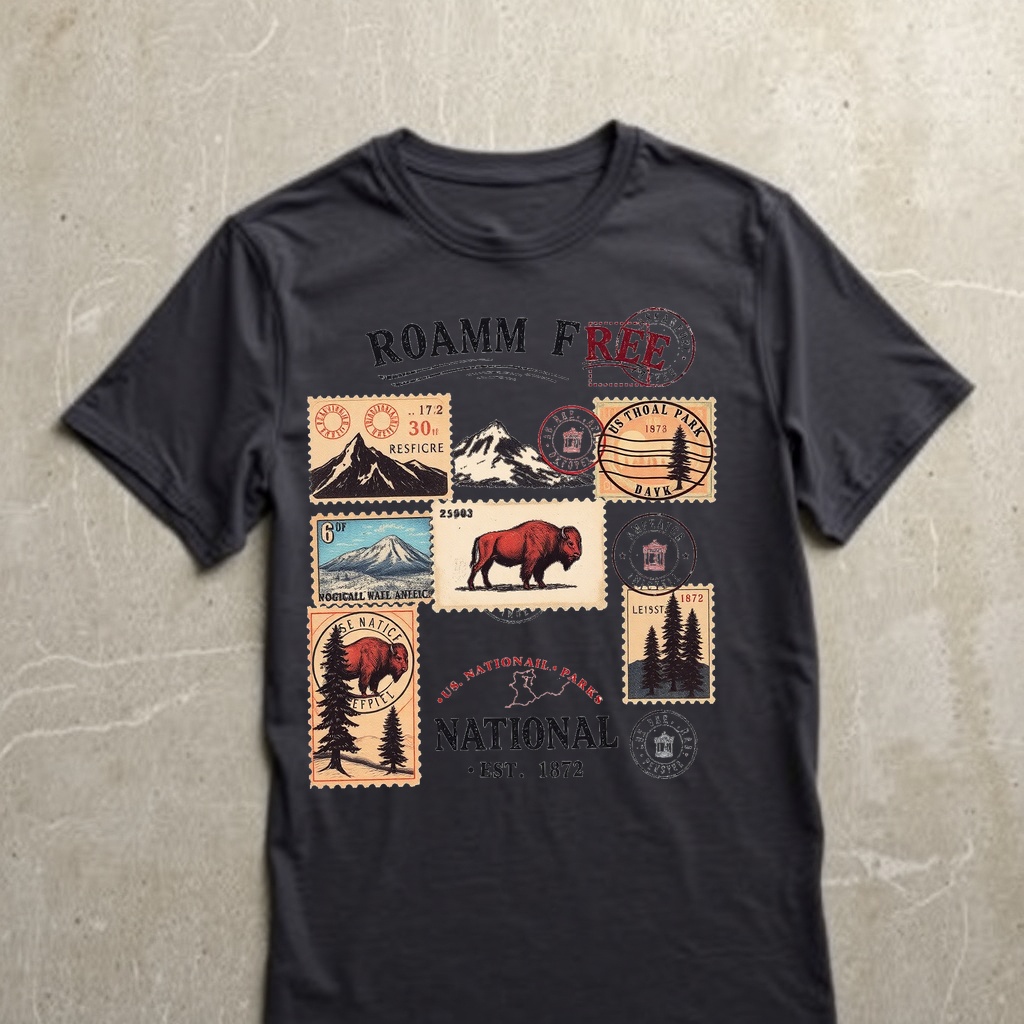
All 63 National Parks Postage Stamp Tee
Vintage Wash Heavyweight Cotton • $34.00
A handcrafted tribute showcasing retro postage stamps of America’s national park landmarks.
Glacier National Park Mountain Goat Tee
Garment-Dyed Comfort Colors 1717 • $34.00
Honoring the fearless high-alpine monarch of Montana’s rugged Going-to-the-Sun wilderness.
4. Leave No Trace: Protecting the Wilderness
Record visitation numbers across national parks place unprecedented strain on fragile ecosystems. Every explorer bears a direct responsibility to tread lightly:
- Respect Wildlife Boundaries: Use telephoto lenses and binoculars. Stay at least 100 yards from bears and wolves, and at least 25 yards from bison, elk, and moose.
- Stay on Designated Trails: Cutting switchbacks causes severe soil erosion and destroys decades-old alpine vegetation that may take centuries to regenerate.
- Pack Out Everything: Food scraps like apple cores and orange peels take years to decompose in arid or high-alpine climates and habituate wild animals to human food.
5. Frequently Asked Questions About National Park Travel
Do I need an America the Beautiful National Parks Pass?
If you plan to visit more than two national parks within a twelve-month period, the $80 America the Beautiful Interagency Annual Pass pays for itself immediately. It covers entrance fees for one vehicle at over 2,000 federal recreation sites across the country.
When is the best season to avoid peak crowds?
Shoulder seasons—specifically May through early June and September through October—offer crisp mountain air, active wildlife, brilliant fall foliage, and significantly fewer trail crowds compared to peak July and August vacation months.
Wear the Spirit of the American Wild
Discover handcrafted graphic tees screen-printed in Austin, Texas on legendary 6.1 oz Comfort Colors blanks.
Written by The Rust & Roam Editorial Team
Born out of dusty backroads, early dawn river casts, and crackling pine embers. We obsess over heavyweight Americana blanks, breathable water-based inks, and timeless heritage gear that wears in, not out.