
In the dusty stockyards of central Texas and across the sprawling brush country of northern New Mexico, you will see a dog that looks at the world with mismatched, piercing eyes and an expression of quiet, coiled intensity. Compact, thick-necked, and mottled with patches of steel-blue or deep rust, the Blue Heeler doesn’t ask for permission. When a 1,200-pound stubborn cow refuses to move into the sorting chute, this thirty-five-pound dog drops its nose to the dirt, snakes underneath the flashing iron hoof, delivers a lightning-fast nip to the heel, and ducks flat against the dust before the retaliatory kick can connect.
Officially recognized as the Australian Cattle Dog (ACD), the breed is affectionately known across the American West simply as the Heeler. Born from a 19th-century genetic crucible that combined feral desert survival instincts with disciplined working sheepdog bloodlines, the Blue Heeler is perhaps the toughest, most uncompromising canine companion ever to ride shotgun on the passenger seat of an old flatbed farm truck.
The Genetic Formula: How the Heeler Was Built
In the 1840s, Australian pioneer Thomas Hall crossed Northumberland Drover dogs with wild native Dingoes. Later breeders infused Dalmatian blood (for natural affinity with horses and loyalty to stockmen) and Black and Tan Kelpie lines. The result was a dog that could tolerate blistering heat, navigate dense thorn scrub, work without barking, and endure weeks in the saddle without exhaustion.
1. The “Silent Biter”: Why the Heeler Moves Cattle Like No Other
Most domestic herding dogs rely on heavy barking and high-visibility flanking maneuvers. Border Collies use “the eye”—an intense, hypnotic stare that intimidates sheep into submission. But semi-wild range cattle in the Australian Outback or western American brush country will simply trample a dog that tries to stare them down.
The Heeler operates on an entirely different tactical doctrine:
-
•
The Low-Biting Reflex: Heelers bite at the back of the pastern (the heel) of the rear leg that carries the animal’s weight. The instant the cow lifts that leg to step forward, the Heeler snaps and releases in a fraction of a second.
-
•
The Duck-and-Roll: When a kicked cow strikes backward, the Heeler’s low center of gravity and thick skeletal density allow it to drop flat into the dirt, letting the hoof sail harmlessly overhead.
-
•
Absolute Silence: Barking scatters cattle and causes unnecessary stampedes. A true working Heeler executes its job without making a sound, moving through brush like a predator to gather stray yearlings.
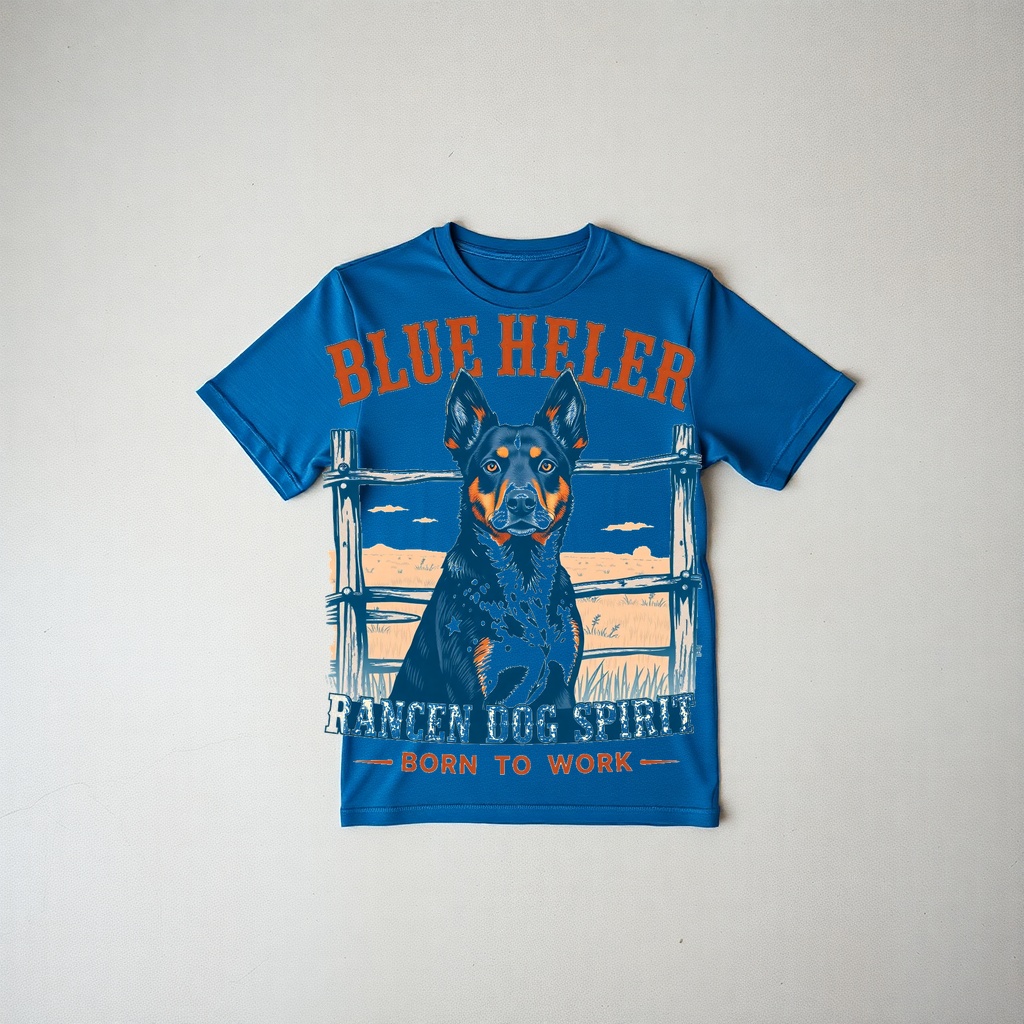
Blue Heeler Cattle Dog Ranch Spirit Tee
A hand-drawn tribute to the loyal, fearless shadows of the American ranchland. Screen printed in Austin, Texas on 6.1 oz vintage garment-dyed Comfort Colors 1717 cotton that withstands claw marks, campfire embers, and decades of truck-bed adventures.
2. The “Velcro Shadow”: Living with an Unforgivingly Loyal Mind
Ask anyone who shares a cabin or truck cab with a Blue Heeler, and they will tell you the same truth: they don’t own the dog; the dog manages them. Heelers are renowned for forming a fiercely exclusive bond with a single human. They are famously dubbed “Velcro dogs” because they will sit with their shoulder pressed firmly against your shin while you sip coffee on the porch, follow you from room to room, and position themselves between you and any stranger approaching the fence line.
This loyalty comes with a price: an astonishing requirement for mental stimulation and purposeful labor. A bored Heeler is an engine of chaotic destruction. Deprive an ACD of a job, and it will invent its own: herd the neighborhood cats, herd your vacuum cleaner, disassemble your leather work boots, or dig a trench underneath the foundation. But give them a fifteen-mile mountain trail to scout, an overland rig to guard, or cattle to herd, and you have an unwavering partner who would gladly throw itself in front of a charging bull to keep you safe.
3. Trail Dog Protocol: Hiking & Camping with an ACD
Because of their compact muscular build and high endurance, Heelers make legendary backcountry trail dogs. However, their working drive requires specific trail management:
-
•
Hydration & Heat Management: Because Heelers have thick, weather-resistant double coats, they can overheat in arid canyonlands. Always carry a dedicated dog water bladder and monitor their gums for signs of excessive panting.
-
•
Pad Conditioning: Granite scree and volcanic basalt will shred unconditioned dog pads. Use Musher’s Secret wax before rocky ridge traverses, and pack lightweight dog booties for scree descents.
-
•
Wildlife Recall: Their Dingo ancestry gives Heelers a potent prey drive. Never let an ACD off-leash in bear or elk country unless their emergency “drop” and recall commands are 100% reliable under distraction.
Celebrate the Working Dogs of the West
Explore our curated collection of trail dog, working cattle dog, and wildlife graphic tees.
Written by The Rust & Roam Editorial Team
Born out of dusty backroads, early dawn river casts, and crackling pine embers. We obsess over heavyweight Americana blanks, breathable water-based inks, and timeless heritage gear that wears in, not out.