
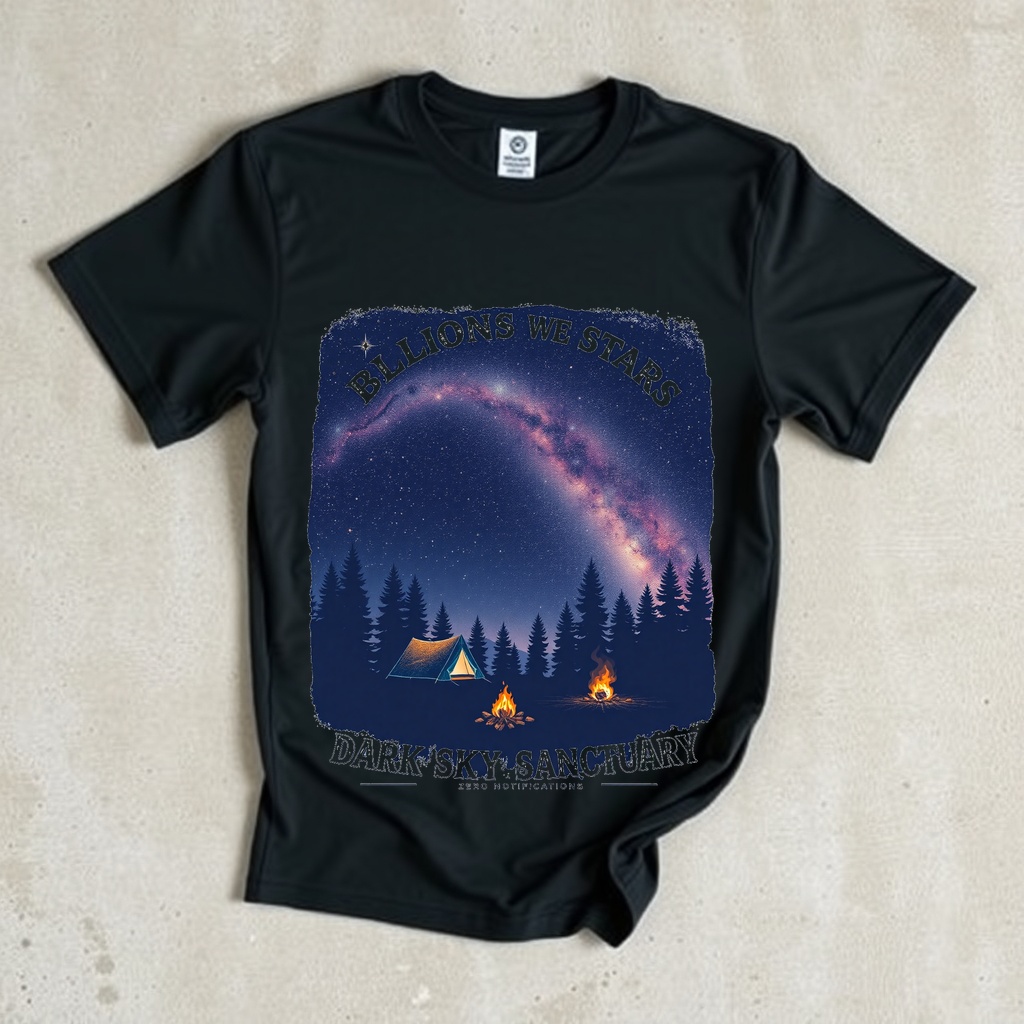
Step into the backyard of almost any modern metropolis, and the night sky is reduced to an orange-gray haze. Over eighty percent of people in North America can no longer see the arc of the Milky Way from their homes. For millions, artificial illumination has severed our most ancient, humbling connection to the cosmos.
Yet deep within America’s national monuments, canyon country, and vast desert basins, pockets of true, primeval darkness still endure. When the sun dips below the mesa rim and civil twilight gives way to the midnight void, thousands of pinpoint stars, distant nebulae, and satellite trails ignite overhead with astonishing brilliance.
Stargazing in the wilderness is more than a casual hobby; it is a sacred nocturnal ritual. Here is our field guide to America’s certified Dark Sky Parks, night vision campcraft, and the durable heavyweight cotton tees built for cold midnight vigils beside the embers.
Darkness Is an Endangered Wilderness
True darkness requires commitment. It demands driving far beyond city lights, setting up camp on remote public lands, and preserving your night vision with strict red-light discipline so your eyes can drink in millions of light-years of celestial history.
1. America’s Premier Dark Sky Sanctuaries
Certified by DarkSky International (formerly the International Dark-Sky Association), these public lands offer the lowest Bortle scale ratings—meaning virtually zero artificial light pollution:
1.1. Big Bend National Park (Texas)
Flanked by the Chisos Mountains and the deep Rio Grande canyons, Big Bend possesses the least light pollution of any national park in the lower 48 states. On moonless nights, the galactic core of the Milky Way casts discernible shadows on the desert gravel floor.
1.2. Natural Bridges National Monument (Utah)
In 2007, this remote canyon park in southeastern Utah was designated the world’s very first International Dark Sky Park. Looking upward through the 106-foot span of Owachomo Bridge at a tapestry of ten thousand glittering stars is an experience that permanently alters your perspective on existence.
1.3. Cherry Springs State Park (Pennsylvania)
Perched atop a 2,300-foot Allegheny Plateau surrounded by 262,000 acres of the Susquehanna State Forest, Cherry Springs is the East Coast’s premier stargazing sanctuary. Astronomers gather on the Astronomy Observation Field with massive Dobsonian telescopes under Bortle Class 2 darkness.
“The stars were so close they seemed within reach, cold and brilliant in the desert blackness, watching over our lonely fire.” — High Desert Field Journal
2. Midnight Campcraft: The Rules of Nocturnal Stargazing
Experiencing the cosmos in deep wilderness requires careful camp etiquette to protect both your vision and your safety:
- The 30-Minute Rhodopsin Rule: Human eyes take approximately twenty to thirty minutes of unbroken darkness to build up rhodopsin (visual purple). A single flash of white phone screen or flashlight instantly resets your night vision to zero.
- Strict Red-Light Only: Use only dim red-filtered headlamps around camp. Red wavelength light does not trigger pupil constriction, preserving your ability to detect faint nebulae and star clusters.
- Know the Lunar Calendar: Always plan your stargazing expeditions during the New Moon window (three days before to three days after the New Moon). A full moon washes out faint meteors and the Milky Way dust lanes.
3. Midnight Thermal Layering: Why Ring-Spun Cotton Matters
In high-desert plateaus and alpine wilderness, clear skies mean rapid radiative heat loss. As soon as the sun drops, ambient temperatures can plummet by 30°F to 40°F in under two hours.
When sitting motionless beside a telescope or campfire past midnight, your base layer is vital. The 6.1 oz heavyweight Comfort Colors 1717 tee provides the ideal foundation:
- Thermal Mass & Wind Break: The dense ring-spun weave insulates core warmth under an overshirt or flannel without trapping stale clammy moisture.
- Campfire Ember Safety: While synthetic polyester puffer jackets melt instantly if a stray wind blows a campfire ember, 100% heavyweight cotton naturally resists sparks.
- Lived-In Softness: Garment-dyed fabric feels velvety against tired skin after a long day of hiking, keeping you comfortable during all-night meteor watch vigils.
4. Graphic Tees Born from Midnight Skies
At Rust & Roam Co., our nocturnal collection draws deep reverence from celestial cartography, midnight wildlife, and campfire stargazing. Explore these customer favorites from our Dark Sky & Midnight Wild Graphic Tee Collection:
Milky Way Over Campfire Dark Sky Tee
Vintage Wash Comfort Colors 1717 • $34.00
Capturing the sacred glow of the galactic core arching over a solitary backcountry fire ring.
Campfire Stargazer Brass Telescope Tee
Garment-Dyed Heavyweight Cotton • $34.00
A tribute to vintage brass optics, constellation charts, and late-night wilderness discoveries.
Celestial Navigation 1890 Star Map Tee
Heritage Ring-Spun Cotton • $34.00
Featuring antique maritime star charts and northern hemisphere constellation lines.
5. Frequently Asked Questions About Dark Sky Stargazing
Do I need an expensive telescope to enjoy Dark Sky Parks?
Not at all. Under Bortle Class 1 or 2 skies, the naked eye can see thousands of stars, satellites, shooting stars, and the great rift of the Milky Way with stunning clarity. A simple pair of 7×50 or 10×50 binoculars provides incredible views of the Andromeda Galaxy and star clusters without bulky equipment.
What is the best time of year to see the galactic center of the Milky Way in North America?
“Milky Way Season” in the Northern Hemisphere runs from late March through October. During mid-summer (June through August), the brightest galactic core is visible high above the southern horizon throughout the darkest hours of midnight.
Wear the Mystery of the Night
Discover all 10 designs in our Dark Sky collection, screen-printed with breathable inks on heavyweight Comfort Colors 1717 blanks.
Written by The Rust & Roam Editorial Team
Born out of dusty backroads, early dawn river casts, and crackling pine embers. We obsess over heavyweight Americana blanks, breathable water-based inks, and timeless heritage gear that wears in, not out.