
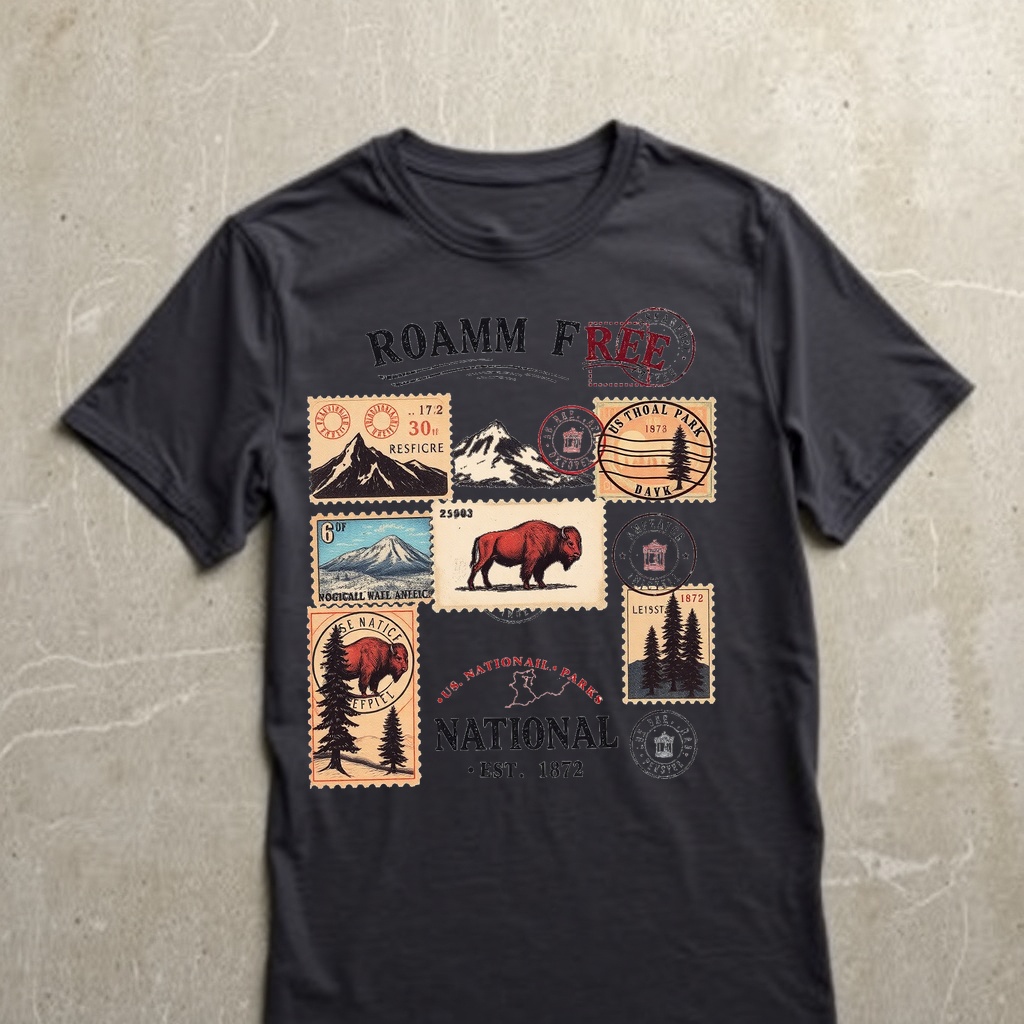
There is a distinct, evocative nostalgia in pulling a genuine vintage national park graphic tee over your head. It carries the whisper of Pacific Northwest cedar mist, red canyon dust from the Colorado Plateau, campfire pine smoke from the Smokies, and the open-window highway hum of a 1970s station wagon rolling past granite guardrails.
Long before outdoor apparel became dominated by synthetic, petroleum-based tech fabrics and sterile digital prints, national park t-shirts were wearable pieces of American art. They were bought at timber-framed roadside gift shops, tossed onto the back bench of pickup trucks, washed hundreds of times in river-water or coin laundromats, and worn until the cotton grew butter-soft and the graphics took on that legendary sun-faded patina.
Whether you are a seasoned collector scouring flea markets and vintage thrift racks or an outdoor enthusiast searching for a modern shirt that captures genuine retro craftsmanship, here is our comprehensive field guide to vintage national park t-shirts: their history, iconic art styles, screen-printing secrets, and why heavyweight 6.1 oz ring-spun cotton remains the gold standard.
Vintage Is a Feeling, Not Just a Timestamp
Authentic vintage park tees weren’t created by high-gloss digital decals or ultra-thin synthetic shirts. They relied on rich, earthy pigment dyes, breathable screen-printed inks fused into the cotton, hand-lettered woodcut typography, and a substantial heavyweight drape that drapes naturally over your shoulders without clinging.
1. The Golden Heritage: From WPA Federal Art to Souvenir Stalls
The visual DNA of vintage national park apparel didn’t begin in a clothing factory—it was born during the Great Depression. Between 1935 and 1943, the Federal Art Project under President Franklin D. Roosevelt’s Works Progress Administration (WPA) commissioned talented American artists to design promotional silkscreen posters for the US Department of the Interior.
1.1. The Silkscreen WPA Masterpieces
Artists working in Western studios hand-cut stencils and layered rich oil-based inks across poster board, creating stark, dramatic depictions of Yellowstone’s Old Faithful, Mount Rainier’s icy peak, and the staggering depths of Zion Canyon. These posters were defined by strong geometric compositions, hand-carved block typography, and a disciplined, muted color palette dictated by the physical limitations of the silkscreen process.
1.2. The 1960s–1980s Souvenir Boom
As the Interstate Highway system expanded after World War II, millions of American families loaded up station wagons and vintage camper rigs to explore public lands. National park visitor centers and concession stands began transferring these iconic artistic motifs onto cotton garments.
In the 1970s and 1980s, souvenir t-shirts were utilitarian pieces of gear. Park rangers, trail crews, and visiting hikers wore them on grueling climbs, backcountry pack trips, and around roaring evening campfires. They weren’t treated like delicate fashion pieces—they were built to endure.
“Thousands of tired, nerve-shaken, over-civilized people are beginning to find out that going to the mountains is going home; that wildness is a necessity.” — John Muir
2. Anatomy of an Authentic Vintage National Park Tee
What separates an authentic vintage-inspired tee from cheap, algorithm-generated reproductions flooded onto mass marketplaces? True park tees possess three non-negotiable qualities:
2.1. Hand-Crafted Art & Era-Specific Typography
Authentic designs feature hand-drawn linework, subtle woodcut textures, and vintage slab-serif or serif lettering reminiscent of 1930s park boundary signposts. Mass-market knockoffs often rely on generic computer fonts and sterile clip-art vectors that feel soulless and modern.
2.2. Soft-Hand, Breathable Water-Based Inks
Nothing ruins a hot summer hike through Joshua Tree or Big Bend faster than a thick, plasticky decal glued to your chest. Authentic heritage tees are printed with soft-hand, water-based or discharge inks that penetrate directly into the cotton weave. You can run your fingers across the graphic and barely feel the ink barrier, allowing the fabric to breathe naturally in warm weather.
2.3. Earthy Garment-Dyed Pigments
True vintage shirts feature colors drawn directly from the wilderness: weathered sage green, desert sandstone terracotta, storm slate blue, washed denim, and soot pepper black. Modern piece-dyed shirts with synthetic neon brights look jarringly artificial against rugged mountain landscapes.
3. Why Paper-Thin Modern Blanks Ruin the Vintage Aesthetic
Many modern retailers cut costs by printing on paper-thin 3.8 to 4.2 oz synthetic blends or cheap carded cotton. The result? A shirt that hugs body contours awkwardly, develops “bacon neck” ripples around the collar after two washes, and feels like cheap promotional giveaway swag.
At Rust & Roam Co., we print every single graphic exclusively on legendary 6.1 oz Comfort Colors 1717 blanks:
- Substantial Heavyweight Feel: Crafted from 100% ring-spun cotton that hangs with a clean, structured boxy drape—never clinging or feeling flimsy.
- Pre-Shrunk Garment Dyeing: Each shirt is washed in specialized pigment dye baths, imparting velvety softness and subtle vintage highlights along the double-stitched seams.
- Tubular Seamless Knit: Spun in a continuous circular tube with no side seams down the ribcage, preventing that frustrating diagonal torso twist after tumble drying.
4. Rust & Roam’s National Park Collection: Built for Trails & Town
Our Austin design workshop pays homage to America’s most revered wild spaces. Discover four customer favorites from our National Parks & Wildlife Graphic Tee Collection:
All 63 National Parks Postage Stamp Tee
Vintage Wash CC 1717 • $34.00
A complete postal tribute capturing every US national park from Acadia to Zion.
Glacier Mountain Goat Heritage Tee
Heavyweight Ring-Spun • $34.00
Honoring Logan Pass, Going-to-the-Sun Road, and the sovereign climber of Montana’s high cliffs.
Grand Canyon Bighorn Sheep Rim Watch Tee
Garment-Dyed Cotton • $34.00
Dedicated to Bright Angel Trail and the majestic desert bighorn rams guarding the South Rim.
Shenandoah Blue Ridge Mist Hiker Tee
Heritage Ring-Spun • $34.00
Celebrating Skyline Drive, Old Rag Mountain, and the rolling blue ridges of Virginia.
5. Washing & Preserving Vintage Graphics for Decades
To maintain the soft vintage hand-feel and protect the graphic from unnecessary friction, observe these essential laundering rules:
- Wash in Cold Water: Water below 85°F (30°C) prevents excess fiber degradation and preserves rich garment dye shades.
- Invert Before Washing: Turning the shirt inside out protects screen-printed artwork from rubbing against zippers, denim rivets, and washer agitators.
- Tumble Dry Low or Line Dry: High heat can shrink cotton and harden water-based inks over time. For our full breakdown, read our Field Guide to Washing Garment-Dyed Tees.
6. Frequently Asked Questions (FAQ)
How can I tell if a national park t-shirt is authentic vintage or modern reproduction?
Look at the collar tag, stitching, and fabric weight. True vintage shirts from the 70s and 80s feature single-needle hem stitching and paper tags (like Screen Stars, Sportswear, or Velva Sheen). Modern heritage reproductions (like Rust & Roam) use double-needle stitching for enhanced durability but preserve the authentic heavyweight 6.1 oz ring-spun cotton and garment-dyed color palette of classic eras.
Why do garment-dyed shirts have subtle color variations?
Unlike mass-produced shirts where fabric is dyed in bulk bolts before cutting, garment-dyed tees are fully constructed before entering the dye vat. Natural variations in yarn absorption create subtle tonal highlights around hems and seams, ensuring that every shirt is a unique one-of-one piece.
Are 6.1 oz heavyweight tees comfortable for summer hiking?
Yes! While technical synthetics are often used for high-output mountain runs, 100% ring-spun cotton breathes naturally, absorbs moisture without turning slimy, and shields your skin against coarse pack straps and harsh mountain sun much better than razor-thin synthetic shirts.
Wear the Spirit of Public Lands
Explore our curated collection of vintage national park graphic t-shirts crafted on authentic 6.1 oz Comfort Colors 1717 blanks.
Written by The Rust & Roam Editorial Team
Born out of dusty backroads, early dawn river casts, and crackling pine embers. We obsess over heavyweight Americana blanks, breathable water-based inks, and timeless heritage gear that wears in, not out.