
There is an ancient, meditative rhythm to standing thigh-deep in a cold mountain freestone river at daybreak. As the morning mist clings to the pine-studded banks and sunlight cuts amber shafts through swirling pools, the noise of modern life evaporates. Out here, with a nine-foot fly rod in hand, your entire universe shrinks down to the delicate drift of an elk hair caddis floating along an undercut riverbank.
Fly fishing is often romanticized, but at its heart, it is an exercise in keen observation and quiet patience. It is not about filling a cooler with fish—it is about understanding the language of moving water, deciphering the insect hatches that dictate wild trout behavior, and immersing yourself in remote river valleys where cell phones have no reception.
Whether you are stepping into a pair of waders for your very first cast or you have rowed wooden drift boats down the Madison and Yellowstone rivers for decades, here is the field guide to reading mountain waters, fundamental fly presentation, ethical catch-and-release, and the timeless heritage of American river angling.
The River Never Tells the Same Story Twice
Trout are wild creatures forged by icy currents and sharp-eyed predators. Success on the river comes not from brute force, but from stealth, delicate line management, and deep respect for the aquatic ecosystem.
1. Reading the Seams: Where Mountain Trout Hide
A river might look like a single chaotic rush of white water, but beneath the surface lies an intricate topography of hydraulic pressure. Trout live on a strict caloric budget: they must spend less energy holding in current than they gain from eating drifting nymphs and terrestrial insects.
1.1. Current Seams & Foam Lines
Where fast water meets slower slack water—such as behind midstream boulders or beneath overhanging willow banks—a “seam” is formed. Foam lines gathering bubbles on the surface act as natural conveyor belts carrying stunned insects directly to waiting rainbow and brown trout.
1.2. The Tailout of Deep Pools
At dawn and dusk, trout venture out from dark, safety-giving river depths into the shallow “tailout” where water begins to speed up before pouring over into the next gravel riffle. A stealthy upstream approach and a long, drag-free drift through the tailout yields some of the most heart-stopping surface strikes of the season.
2. The Two Essential Fly Presentations
-
Dry Fly Presentation (The Visual Thrill)
Fishing floating flies (Mayflies, Caddisflies, Stoneflies) requires eliminating “drag.” If current grabs your thick fly line and drags the fly faster than the natural bubble line, a wary wild trout will instantly refuse it. Mend your fly line upstream immediately after casting to ensure a pure, natural drift.
-
Nymphing the Riverbed (Where 90% of Feeding Occurs)
Trout feed beneath the surface for nine out of every ten meals. Weighted nymph rigs (such as Pheasant Tails and Prince Nymphs) fished under a small strike indicator bounce along the riverbed gravel right in front of a trout’s feeding lane.
“Many men go fishing all of their lives without knowing that it is not fish they are after.” — Henry David Thoreau
3. Riverbank Layers: Tailgate Comfort on Cold Mornings
Wading freezing alpine waters requires smart layering. While neoprene waders and breathable Gore-Tex shells shield you from river spray, what you wear against your skin determines your all-day comfort.
A heavyweight 6.1 oz ring-spun cotton tee like the Comfort Colors 1717 is the undisputed uniform of early morning tailgate rigging and evening campfire tall tales. It breathes effortlessly beneath fleece vests, provides sturdy warmth when the morning river chill bites, and gets softer with every wash in the tackle room.
4. Graphic Tees That Honor River Heritage
At Rust & Roam Co., our Austin design workshop celebrates the spirit of wooden drift boats, hand-tied flies, and pristine trout waters. Explore these standout designs from our Fly Fishing Apparel Collection:
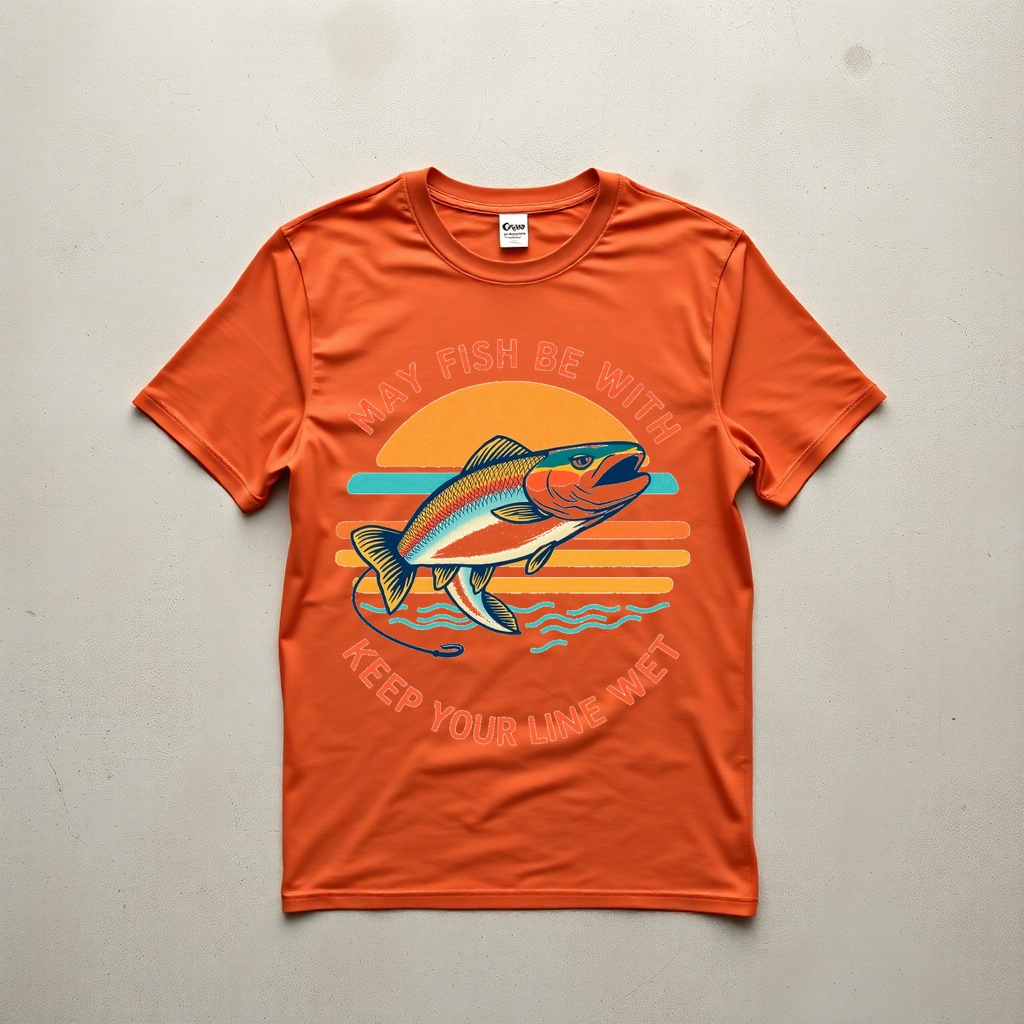
May The Fish Be With You Retro Tee
Vintage Wash Comfort Colors 1717 • $34.00
A tongue-in-cheek vintage badge honoring early morning river casts, dry flies, and tight lines.
Wooden Drift Boat Soul Heritage Tee
Garment-Dyed Heavyweight Cotton • $34.00
Dedicated to the timeless craft of wooden drift boats navigating roaring Western rapids.
5. Ethical Catch-and-Release: Keep ‘Em Wet
Wild native trout are a finite resource. Proper handling ensures that the fish you land today can fight another day:
- Always Wet Your Hands First: Dry hands strip the protective slime coating from a trout’s skin, leaving them vulnerable to lethal fungal infections.
- Use Barbless Hooks & Rubber Nets: Pinch your hook barbs down with hemostats. Knotless rubber nets protect delicate fins and scales.
- Minimize Air Exposure: If you take a photo, lift the trout for no more than three to four seconds, keeping them facing upstream in current until they kick away strongly on their own.
6. Frequently Asked Questions for Beginner Anglers
What is the best all-around fly rod setup for beginners?
A 9-foot, 5-weight (9ft 5wt) fly rod with a medium-fast action and weight-forward floating fly line is the universal Swiss Army knife of fly fishing. It can delicately present small dry flies on spring creeks while having enough backbone to throw streamers on windy Western rivers.
How do I match the hatch on an unfamiliar river?
Turn over a few wet rocks along the riverbank riffles before tying on a fly. Look at the size, shape, and color of the aquatic nymphs clinging to the stones. Matching that profile closely is far more important than exact pattern brand names.
Gear Up for Quiet Waters
Explore all 100 heritage Americana tees screen-printed on legendary 6.1 oz Comfort Colors 1717 blanks.
Written by The Rust & Roam Editorial Team
Born out of dusty backroads, early dawn river casts, and crackling pine embers. We obsess over heavyweight Americana blanks, breathable water-based inks, and timeless heritage gear that wears in, not out.