
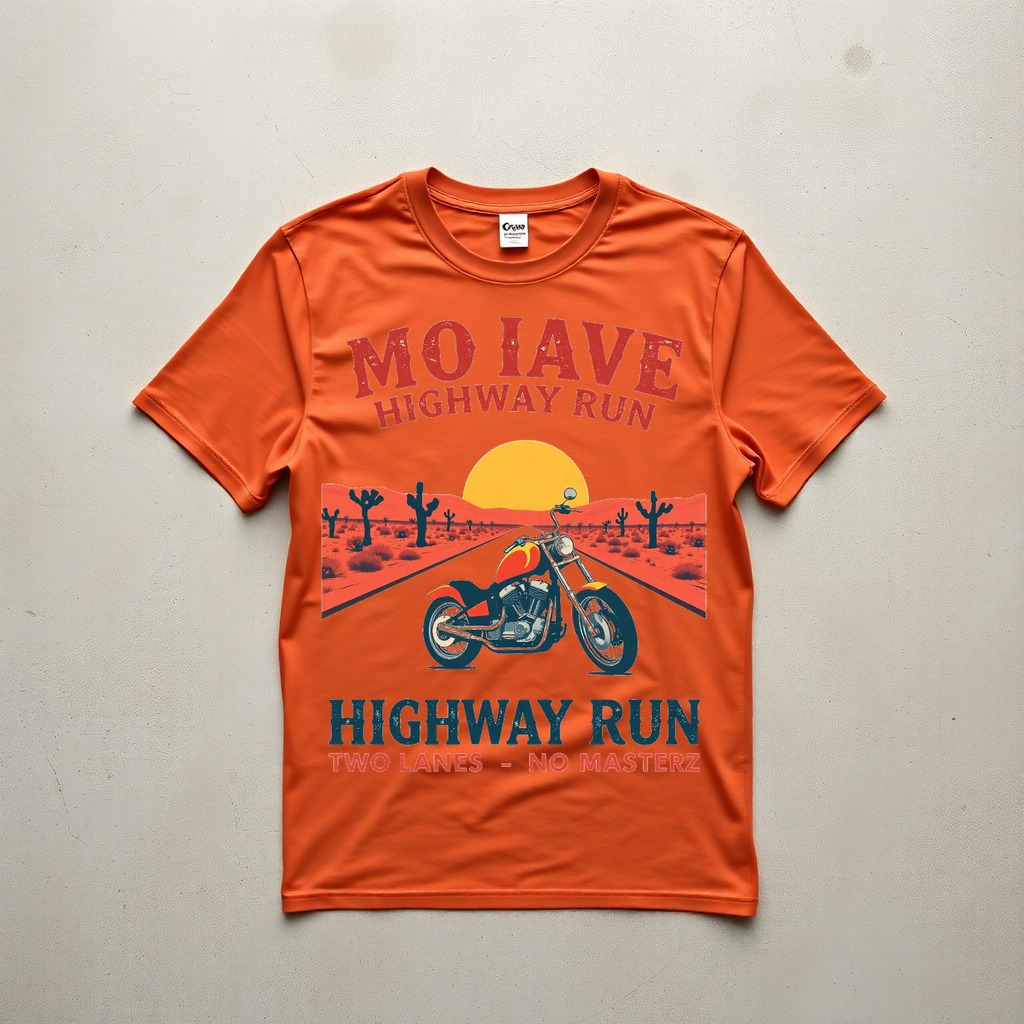
In the spring of 1972, east of Barstow where the paved ribbon of Route 66 cuts straight through the alkali flats of the Mojave Sink, the desert air shimmered under hundred-degree heat. There were no cellular towers, no GPS dashboards, and no air-conditioned support vans. Just an unholy chorus of carbureted V-twin engines running open drag pipes, cutting through the silence of Joshua tree basins.
The early 1970s marked the golden zenith of authentic American chopper culture. Riders didn’t purchase custom factory motorcycles from high-end boutiques—they built them by hand in two-bay backyard garages. They stripped off front fenders, sawed off heavy turn signals, welded high sissy bars, raked their headstocks, and rode rigid hardtail frames across hundreds of miles of blistering Western asphalt.
From dusty desert crossroads to roadside neon diners, here is our deep dive into the legend of the 1970s Mojave Desert chopper runs, the counterculture mechanics who built them, and why authentic 6.1 oz heavyweight cotton remains the definitive rider’s shield against highway windburn.
If It Doesn’t Make It Faster or Lighter, Cut It Off
True 1970s choppers weren’t built for comfort. With zero rear suspension, suicide jockey shifters, and narrow peanut tanks that held barely two gallons of fuel, crossing the Mojave was an act of mechanical faith and physical grit.
1. The Barstow-to-Needles Run: Two-Lane Desert Crucible
Before interstate speedways flattened the topography, crossing southeastern California required navigating treacherous two-lane ribbons like old Route 66 and Highway 62. On a rigid motorcycle with a spring-mounted solo seat, every frost heave, road patch, and cattle guard jarred through the rider’s spine.
The Mojave Desert runs weren’t organized corporate rallies. They were word-of-mouth gatherings of independent builders, Vietnam veterans, and desert gearheads who rode in loose packs from the San Gabriel foothills out toward the Colorado River. Gas stops at weathered Texaco and Union 76 stations were mandatory every seventy miles, giving riders a chance to splash cold well-water on sunburnt faces and adjust loose rocker boxes with hand wrenches.
2. The Aesthetics of 1970s Custom Machines
What made early 70s desert choppers visually unforgettable?
- Raked Rigid Frames: Cutting the neck of a factory frame to stretch the wheelbase out created the unmistakable low, slung-back silhouette.
- Upswept Drag Pipes: Raw steel pipes bent upward to clear rocky desert berms, barking deafening horsepower across empty sagebrush valleys.
- Hand-Drawn Tank Artwork: Heavy metal flake lacquer, pinstriping, and psychedelic desert iconography painted in dusty garage bays.
“Out here, there is nothing between you and the horizon except engine heat and road wind. You don’t hide from the elements—you wear them.” — Mojave Desert Rider Lore
3. Why Thin Fast-Fashion Shirts Tear Apart on Two Wheels
Modern riders who make the mistake of wearing paper-thin 3.8 oz polyester fashion tees quickly learn a painful lesson: at seventy miles an hour, thin fabric flutters violently against your chest like a torn trash bag, causing agonizing friction burn. Stray gravel kicked up by highway traffic stings through thin cloth, and petroleum-based synthetics melt instantly if they brush against hot cylinder heads.
That is why vintage motorcycle mechanics and open-road travelers have always sworn by heavyweight 6.1 oz ring-spun cotton like the Comfort Colors 1717:
- Substantial Highway Shield: The dense 6.1 oz weave lies flat against your torso in crosswinds without ballooning or fluttering.
- Heat & Spark Resistance: 100% natural cotton naturally resists exhaust pipe heat and rogue sparks, unlike plastic-derived synthetics.
- Garment-Dyed Sun Patina: Pigment dye washes age like a vintage leather saddle, developing high-and-low tonal fades along the collar and seams as road dust and sun bake into the fabric.
4. Rust & Roam’s Road Trip & Motors Collection
At Rust & Roam Co., our Austin design workshop celebrates the roaring iron, mechanical independence, and asphalt mythology of twentieth-century America. Explore customer favorites from our 70s Road Trip & Motors Collection:
Mojave Desert 1972 Chopper Run Tee
Vintage Wash CC 1717 • $34.00
Dedicated to rigid frame choppers, open drag pipes, and two-lane California desert runs.
Motorcycle Speed Shop Heritage Tee
Heavyweight Ring-Spun • $34.00
Honoring independent tuning garages, hand wrenches, and desert racing simplicity.
Old Iron 1969 Vintage Truck Tee
Garment-Dyed Cotton • $34.00
Carbureted Detroit V8 iron built for work, ranch gates, and decades of genuine patina.
Full Tank Gas & Oil Globe Tee
Vintage Wash CC 1717 • $34.00
Featuring vintage illuminated service station globes and mid-century motor emblems.
5. Frequently Asked Questions (FAQ)
What route did the 1970s Southern California desert chopper runs follow?
Most runs departed the San Fernando or San Gabriel Valleys, climbing over Cajon Pass toward Victorville and Barstow. From there, riders followed old Route 66 across the desert toward Ludlow, Amboy, and the Colorado River border town of Needles, often camping beneath the stars in dry washes.
How do Comfort Colors 1717 shirts fit for motorcycle riding?
The 1717 features an authentic, relaxed American tubular fit. The sleeves hit mid-bicep without binding around the armpits, and the stout 1″ ribbed collar stays flat against your neck without sagging. Sizing is true to size for comfortable layering over thermal long-sleeves.
How should I care for motorcycle graphic tees after dusty road trips?
Wash cold inside-out using mild detergent and tumble dry on low. Our soft-hand water-based screen prints are embedded directly into the cotton weave, meaning road dust washes out cleanly without cracking or peeling the graphic. Read our complete Vintage Tee Laundering Field Guide.
Hit the Open Highway
Explore our complete collection of vintage motorcycle, garage, and road trip graphic t-shirts crafted on 6.1 oz Comfort Colors 1717 blanks.
Written by The Rust & Roam Editorial Team
Born out of dusty backroads, early dawn river casts, and crackling pine embers. We obsess over heavyweight Americana blanks, breathable water-based inks, and timeless heritage gear that wears in, not out.