
There is a deep, primal satisfaction in resting a heavy eight-pound cast-iron skillet directly onto a glowing bed of red oak and hickory embers as the mountain twilight turns from indigo to pitch black. The quiet of the woods is answered immediately by the sharp, sizzling pop of thick-cut peppered bacon, the smell of rendered fat rising in the pine canopy smoke, and the unmistakable sound of a meal being earned under the stars.
In an outdoor industry increasingly obsessed with ultralight titanium cookware and freeze-dried foil pouches that taste like salty cardboard, the enduring reign of heritage cast-iron is a testament to timeless American camp craft. A well-seasoned iron skillet doesn’t care about fragile ceramic non-stick coatings; it shrugs off windstorms, laughs at 800-degree campfire coals, and retains heat with the thermodynamic stubbornness of bedrock.
The Erie & Sidney Legends: Why Vintage Cast Iron Still Rules
Pick up a modern store-bought cast-iron skillet and run your fingertips across the cooking surface: it feels bumpy, resembling coarse 60-grit sandpaper. Now touch a pre-1950s skillet made by Griswold Manufacturing in Erie, Pennsylvania, or Wagner Ware in Sidney, Ohio. The cooking surface is silky and mirror-smooth. Back then, foundry artisans hand-ground and stone-polished the iron after sand-casting, creating a slick glass-like patina that modern mass production simply abandoned.
1. The Chemistry of Campfire Seasoning: Building Polymerized Armor
The black patina on a legendary camp skillet isn’t paint; it is chemistry. Seasoning occurs when unsaturated cooking fats (such as flaxseed oil, grapeseed oil, or rendered beef tallow) are heated past their smoke point inside the microscopic pores of porous gray iron. At high heat, the fatty acid chains undergo chemical polymerization and carbonization, cross-linking into a natural, slick polymer glaze bonded permanently to the metal.
To maintain this protective armor while camping in the backcountry, follow three hard-earned campfire rules:
-
01.
Embers Over Flame: Never set your cast iron over active, licking yellow flames. Flame produces soot and uncontrollable hot spots that burn seasoning clean off. Rake glowing hardwood coals to the side of the fire ring and set your skillet over consistent, radiant ember heat.
-
02.
Water Steam De-glaze: After cooking, pour half a cup of hot water into the still-warm pan. The explosive steam instantly releases stuck pan drippings without stripping your seasoning layer. Scrape gently with a chainmail scrubber or wooden spatula.
-
03.
The Post-Dinner Oil Rub: Place the clean pan back over warm embers until dry, apply a dime-sized dab of high-smoke-point oil with a cotton cloth, and wipe it completely dry until the iron glows like dark river stone.
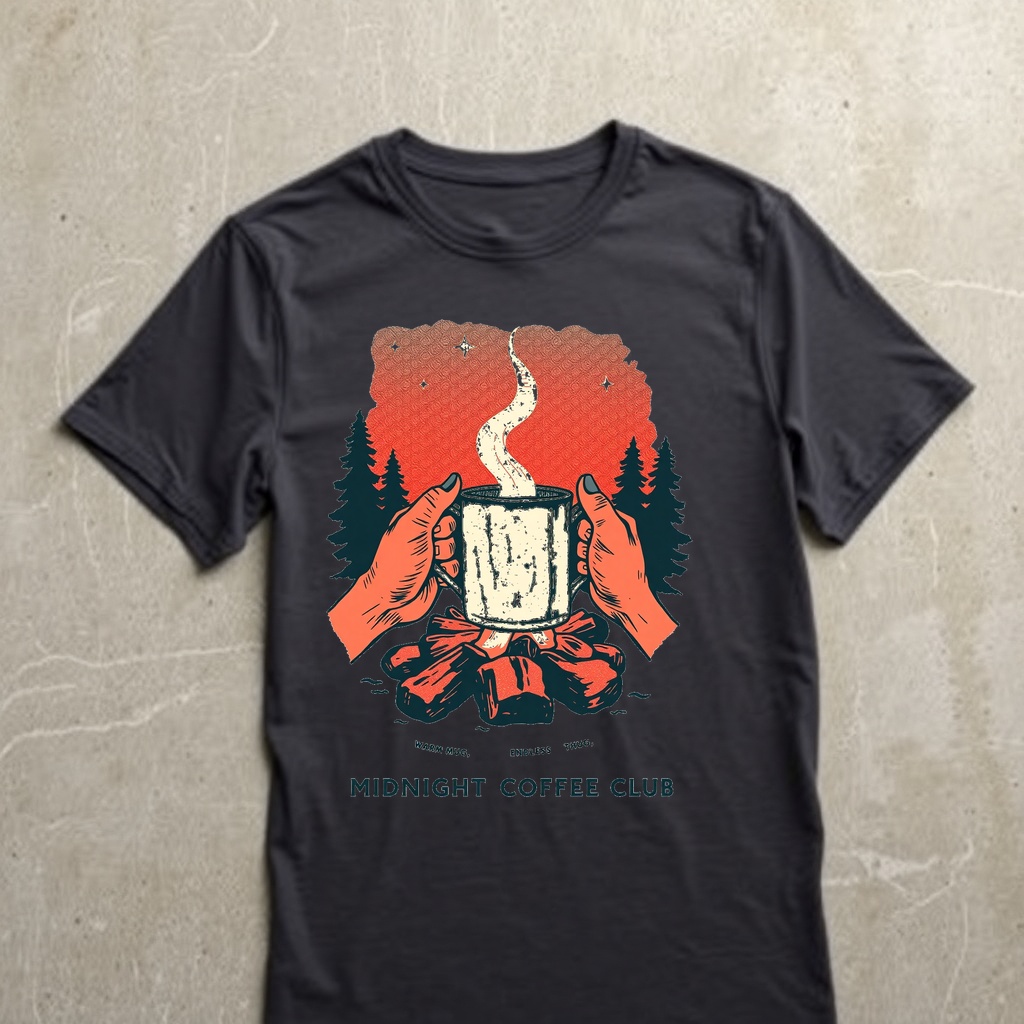
Midnight Coffee & Embers Camp Tee
Hand-drawn artwork celebrating glowing red coals, cast-iron cooking, and steaming midnight tin mugs in the high timber. Screen printed in Austin, Texas on heavyweight 6.1 oz Comfort Colors 1717 garment-dyed cotton.
2. Three Essential Tailgate Skillet Classics
Camp food should never be complicated; it should be robust, nutrient-dense, and deeply comforting after a hard day on the trail or river:
1. The High-Country Mountain Hash
Crisp diced russet potatoes in leftover bacon fat until golden brown. Toss in chopped bell peppers, yellow onions, and spicy smoked venison or pork sausage. Create four small nests in the mixture, crack fresh farm eggs directly into the pockets, cover with a tin lid or foil for three minutes until the whites set, and dust generously with smoked paprika and sharp cheddar.
2. Cast-Iron Campfire Cornbread
Pre-heat your #8 skillet with two tablespoons of butter until foamy. Pour in your yellow cornmeal batter laced with chopped jalapeños and sweet corn kernels. The blazing hot iron creates an instant crust on the bottom that bakes into an intoxicating, crackling crust as the bread rises over indirect campfire coals.
3. Reverse-Seared Ribeye on Red Oak Coals
Place a 1.5-inch bone-in ribeye on an elevated grate away from direct fire until the internal temperature reaches 115°F. Slide your smoking hot cast-iron skillet directly over the hottest bed of embers, drop in beef tallow, fresh rosemary, and crushed garlic cloves, and sear each steak face for exactly 90 seconds until a deep, dark mahogany crust forms.
3. Heavyweight Cotton & Campfire Spark Protection
Anyone who has cooked over an open campfire knows that popping sparks and heat radiation are inevitable. Synthetic fleeces and nylon windbreakers are notoriously vulnerable—one stray cinder burns an ugly, permanent melted hole through technical polyester.
That is why experienced outdoorsmen wear 100% heavyweight cotton around camp. At 6.1 oz per square yard, Comfort Colors 1717 ring-spun cotton naturally resists casual spark damage, shields against radiant heat, and traps comforting warmth when the breeze whips through the campsite after dinner.
Upgrade Your Campfire Wardrobe
Use code ROAM10 at checkout to save 10% on your first order of vintage outdoor graphic tees.
Written by The Rust & Roam Editorial Team
Born out of dusty backroads, early dawn river casts, and crackling pine embers. We obsess over heavyweight Americana blanks, breathable water-based inks, and timeless heritage gear that wears in, not out.