
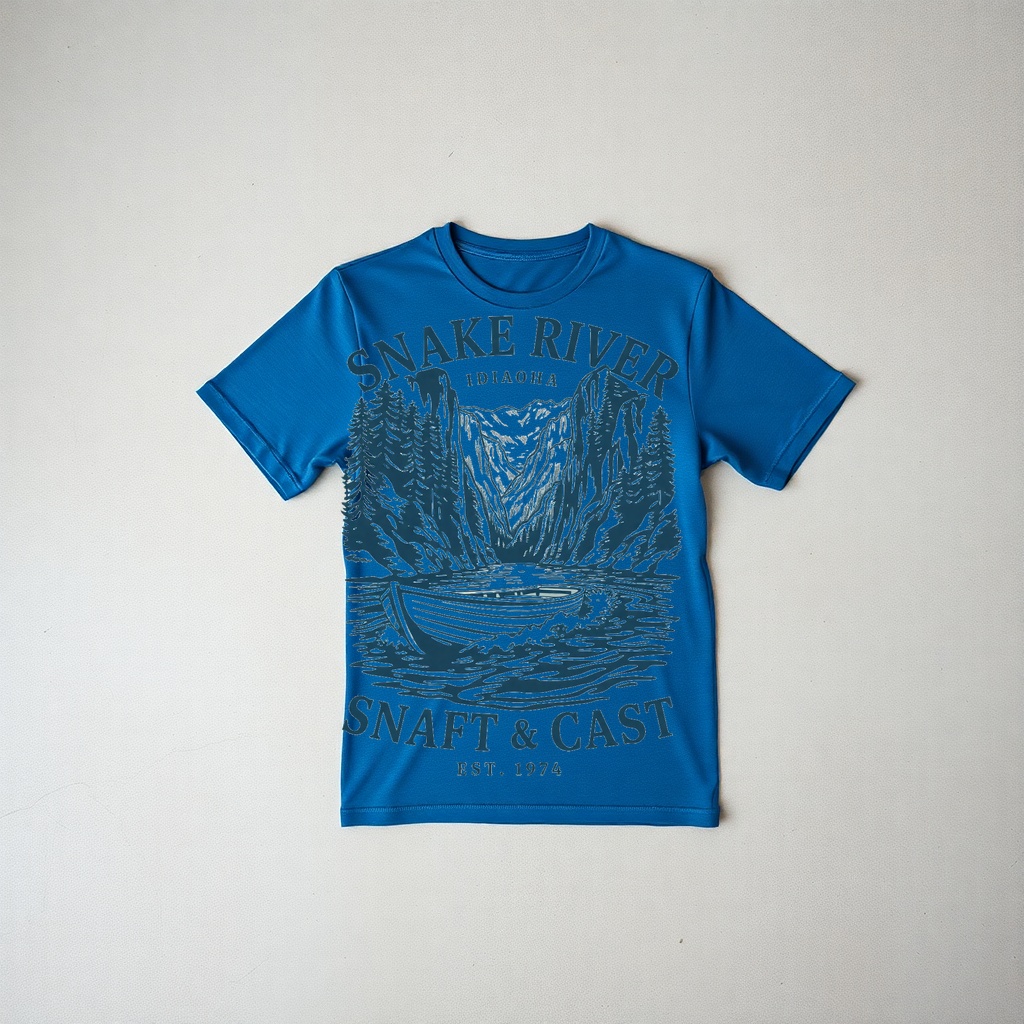
“A wooden drift boat doesn’t fight a wild river; it dances with the current. With each pull of the ash oars, the cedar hull slides across foam lines as silently as an osprey in flight.”
Born out of the rushing white water of the Pacific Northwest and perfected across the blue-ribbon freestone rivers of Montana, the McKenzie-style drift boat—or “dory”—is one of the most elegant watercraft ever built by human hands. With its rocker-shaped flat bottom, flared sides, and pointed double-ended profile, a drift boat allows a skilled oarsman to hover effortlessly in swirling river seams, holding an angler steady while they place a hand-tied dry fly precisely against a willow-lined cutbank.
1. The Soul of Wood vs. Fiberglass
While modern commercial river guides often row indestructible fiberglass or rotomolded plastic boats, true traditionalists still cherish the warmth and acoustics of a marine plywood and cedar dory.
A wooden hull flexes gently with river turbulence, dampening wave vibration and gliding across standing waves without the hollow slap of fiberglass. When a native trout splashes near the hull, the wood resonates like the body of an acoustic guitar. Our Wooden Drift Boat Snake River Tee pays tribute to this handcrafted American riverboat heritage.
2. Stalking the Native Westslope Cutthroat
In rivers like the Upper Yellowstone, the Blackfoot, and the Middle Fork of the Flathead, anglers pursue the crown jewel of Big Sky waters: the native Westslope Cutthroat trout (*Oncorhynchus clarkii lewisi*). Unlike skittish brown trout that feed primarily in dim twilight, native cutthroats evolved in crystal-clear, nutrient-sparse mountain freestones.
They are opportunistic, fearless surface feeders, willing to rise through eight feet of gin-clear current to smash a foam Chernobyl Ant or a high-floating Royal Wulff. Their fiery crimson slash beneath the lower jaw and golden-bronze flanks make them an unforgettable sight when brought gently to the net. Check out our Montana Cutthroat Trout Heritage Tee and Brown Trout River Therapy Tee.
3. The Oarsman’s Craft: Reading Hydraulics & Foam Lines
The person at the oars holds the success and safety of the entire float in their hands. Rowing a drift boat is counter-intuitive to beginners: you face downstream, pulling back on the oars against the current to slow the boat relative to the river flow.
By matching boat speed to river speed, you eliminate drag on the fly line, giving your angler the holy grail of fly fishing: a completely natural, drag-free drift. Skilled rowers look for “foam lines”—the bubble tracks where river currents converge, carrying a conveyor belt of emerging mayflies and caddis straight into the mouths of feeding trout.
4. River Etiquette & Cold-Water Conservation
With increased recreational use on Western rivers, respecting water and fellow anglers is vital. Always yield to wade fishermen standing along gravel bars, giving them a wide berth so your oars don’t spook fish in their run.
Practice strictly barbless catch-and-release: keep fish wet, minimize handling, and never play trout to exhaustion in late summer water temperatures exceeding 66°F. When you protect wild rivers, you preserve the cathedral of clean cold currents for the next generation of rowers.
Wear the Wild River Spirit
Heavyweight 6.1 oz Comfort Colors 1717 tees in River Slate, Driftwood Sand, and Deep Forest Moss.
Written by The Rust & Roam Editorial Team
Born out of dusty backroads, early dawn river casts, and crackling pine embers. We obsess over heavyweight Americana blanks, breathable water-based inks, and timeless heritage gear that wears in, not out.