
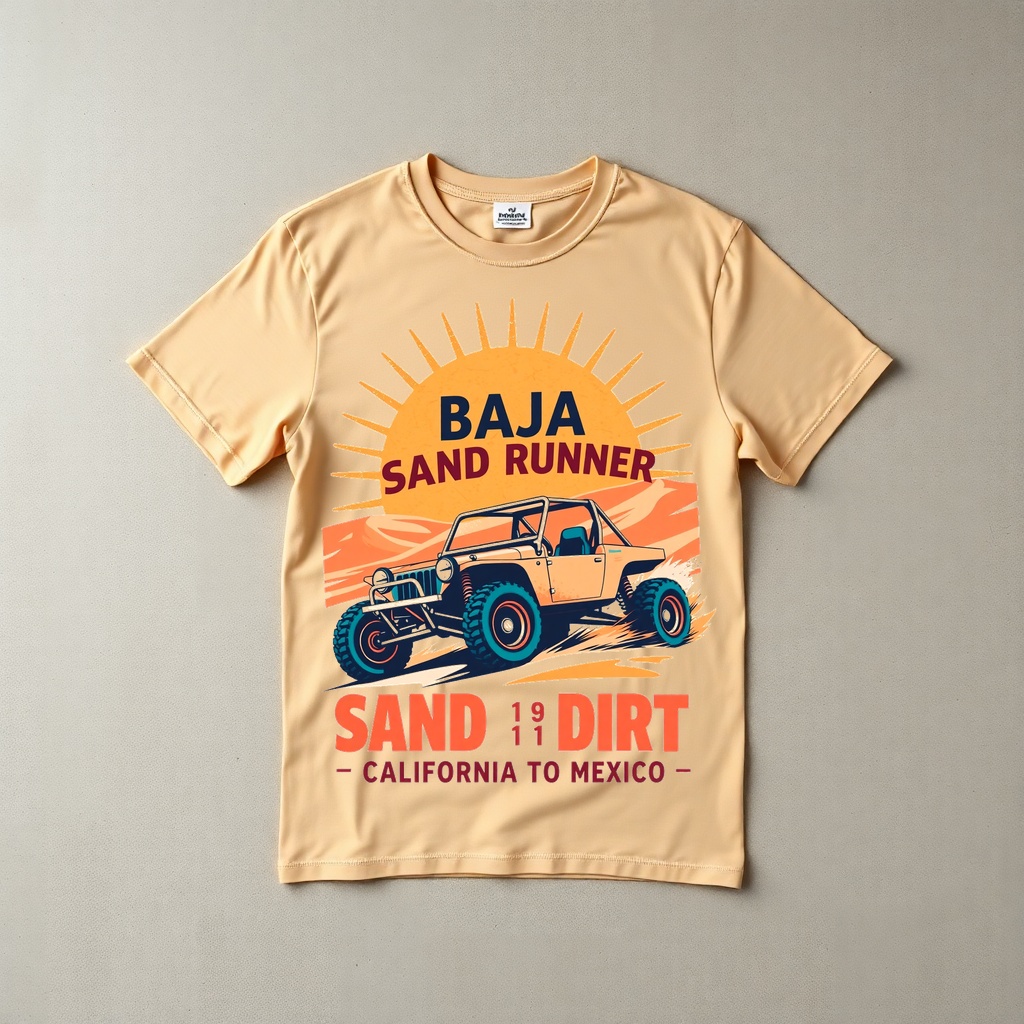
“Out on the Baja peninsula, there are no guardrails, no ambulances, and no second chances. There is only a thousand miles of boulder-strewn washes, blinding talcum silt, and the howling roar of an air-cooled flat-four engine pinned at wide-open throttle.”
Every November, the Baja California peninsula transforms into the battleground for the most grueling, romantic, and dangerous off-road endurance race on Earth: the SCORE Baja 1000. Stretching from the Pacific coastal town of Ensenada down the length of the peninsula to the tropical finish line in La Paz, this point-to-point race pits human grit, mechanical ingenuity, and primitive machines against razor-sharp volcanic rock, endless cactus forests, and desert heat that melts resolve.
1. Bruce Meyers & The Birth of the Dune Buggy
The legend of Baja off-road racing was born in 1967 when boatbuilder and surfer Bruce Meyers built “Old Red”—the original Meyers Manx fiberglass dune buggy bolted atop a shortened Volkswagen Beetle floorpan. Weighing less than 1,000 pounds and riding on oversized high-flotation tires, Meyers drove Old Red down the untamed Baja peninsula in 34 hours and 45 minutes, shattering the previous motorcycle record by more than five hours.
Meyers’ run captured the world’s imagination, proving that lightweight simplicity, rear-engine traction, and raw daring could outrun heavy four-wheel-drive trucks across sand dunes. Our Baja 1000 Sand Dune Buggy Vintage Tee and Baja 1000 Dust and Glory Tee immortalize this golden age of desert racing.
2. The Menace of Fesh-Fesh Silt Beds
Ask any Baja veteran what keeps them awake at night, and the answer is always the same: “silt beds.” Known in desert racing as *fesh-fesh*, this pulverized volcanic earth has the consistency of baby powder or dry flour, hiding waist-deep ruts and axle-snapping boulders beneath a deceivingly smooth surface.
When a race car enters a silt bed, visibility drops to zero within milliseconds as a blinding white cloud envelops the cockpit. Drivers must maintain momentum—if you hesitate, lift off the throttle, or brake, your wheels sink to the belly pan in scorching hot silt, requiring hours of brutal hand-digging with traction boards under a blazing midday sun.
3. The Bivouac Culture: Tacos, Tequila & Pit Crew Brotherhood
The Baja 1000 isn’t won solely behind the wheel; it is won by the unsung chase crews who drive support trucks through desert bypasses for 40 straight hours without sleep.
Waiting for your race car at a remote pit stop in San Felipe or Coco’s Corner in the dead of night, sharing street tacos and beer with local ranchers around a makeshift barrel fire, you realize that Baja is a culture of radical hospitality. When a competitor breaks down in a wash, rival pit crews will toss them spare parts and tools because the shared enemy isn’t each other—it is the desert itself. Check out our Rust and Roam Motorcycle Speed Shop Tee and Desert Survival Jerry Can and Gear Tee.
4. Desert Endurance Wardrobe: Heavyweight Cotton & Desert Dust
In the dry Sonora and Baja deserts, synthetic activewear melts under exhaust heat and holds onto foul sweat odors. Desert mechanics and vintage racers rely on thick, breathable 100% ring-spun cotton that acts as a natural dust barrier, breathes under relentless sun, and holds up to grease, fuel splashes, and coarse sand.
A garment-dyed tee washed in desert dust only looks better with age—a badge of honor proving you took the long road and survived the thousand-mile test.
Wear the Thousand-Mile Baja Spirit
Heavyweight 6.1 oz Comfort Colors 1717 tees in Desert Sand, Washed Terracotta, and Pepper Black.
Written by The Rust & Roam Editorial Team
Born out of dusty backroads, early dawn river casts, and crackling pine embers. We obsess over heavyweight Americana blanks, breathable water-based inks, and timeless heritage gear that wears in, not out.